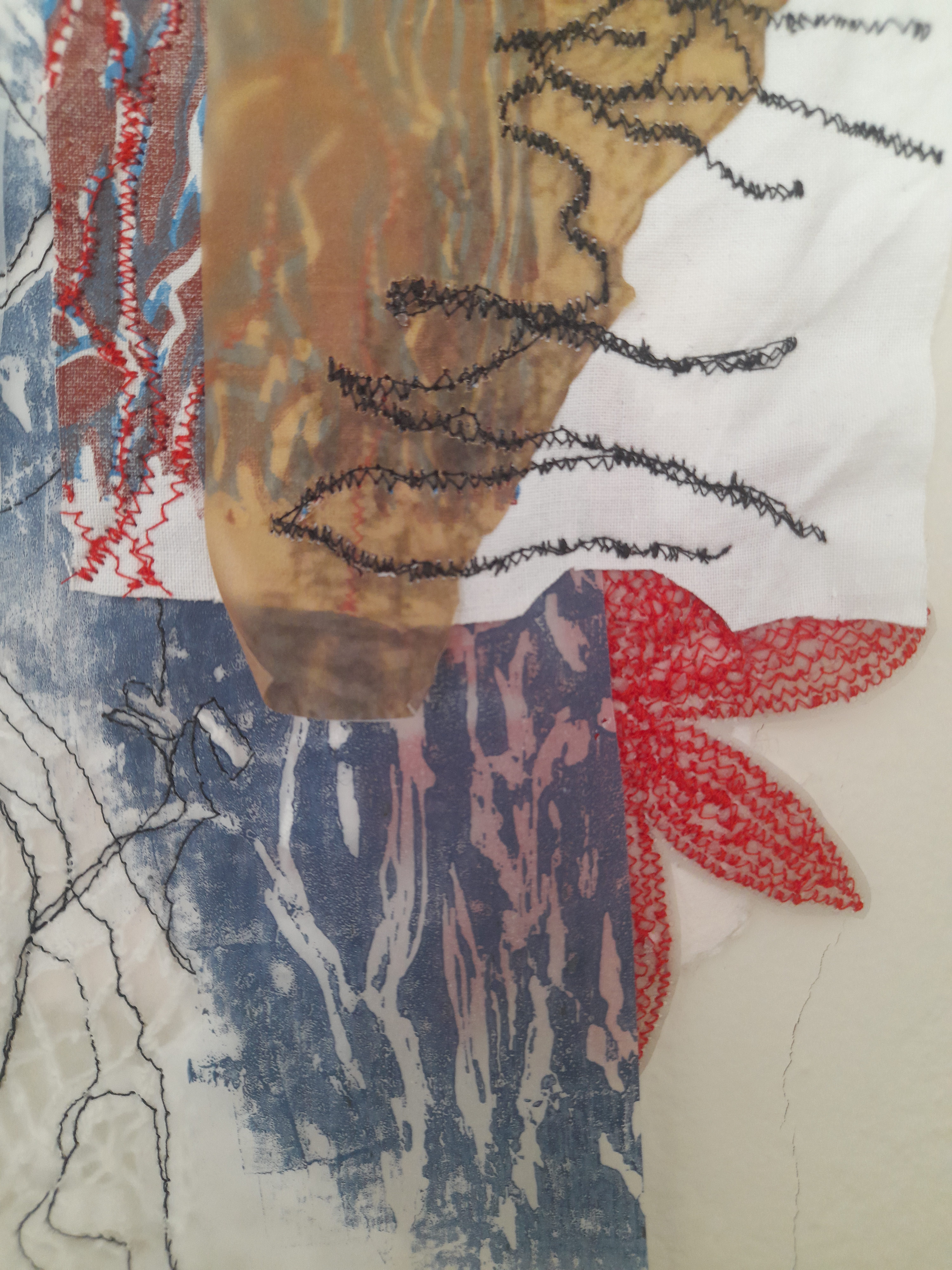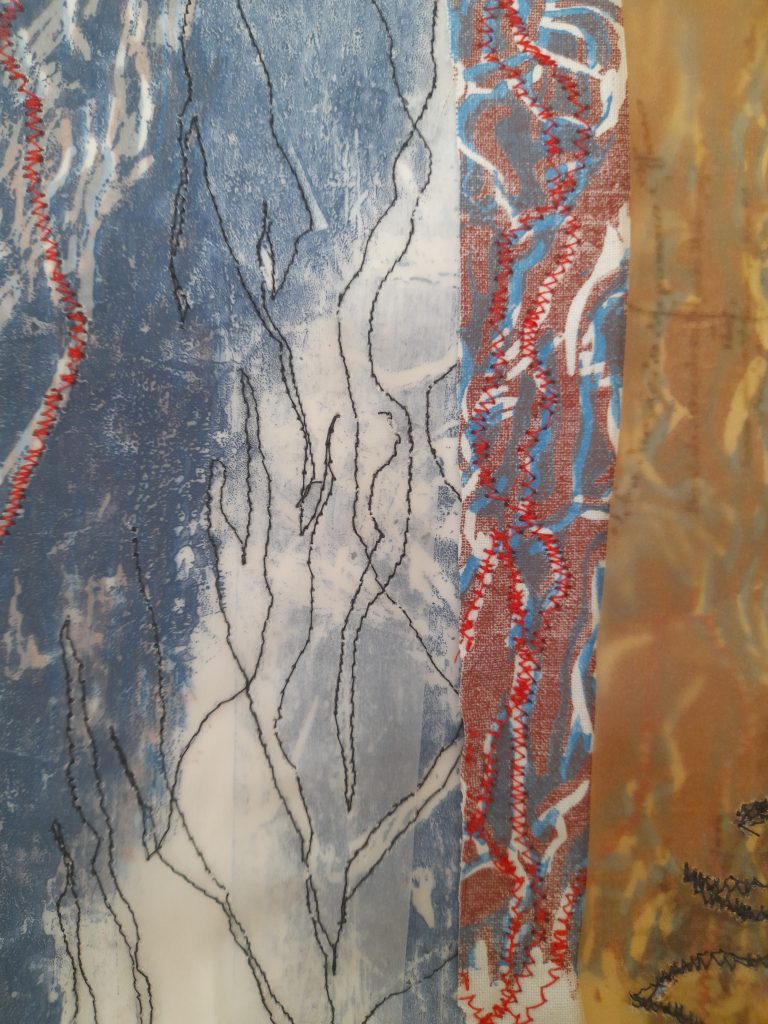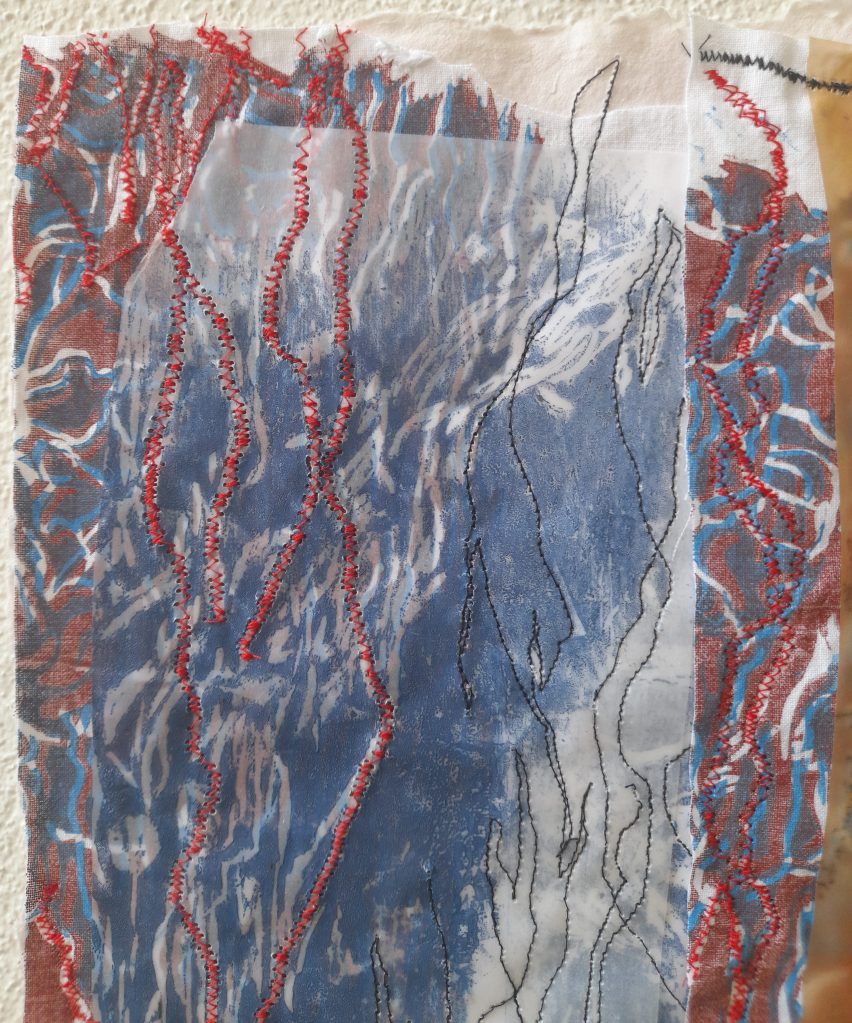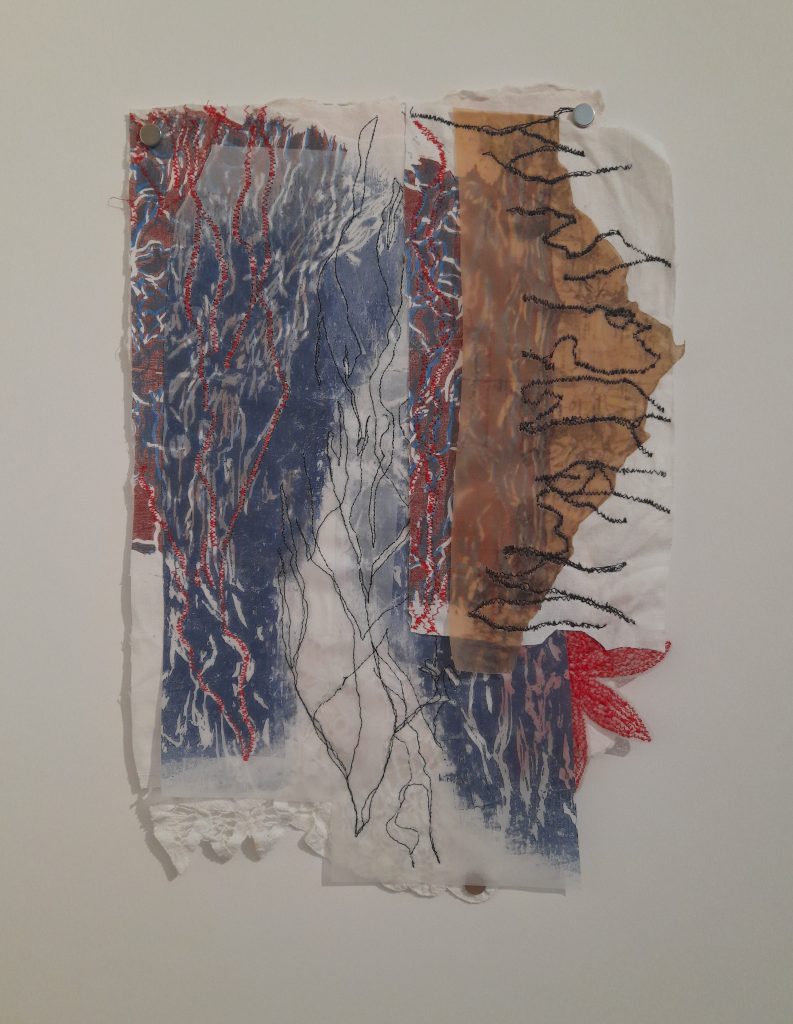
This work begins with what the glass does not show. The “Caneca Inglesa” offers only its transparency, yet that clarity was conquered, drawn from sand, fire, forest and labour. The piece, an assemblage of layered transparent papers, returns to the object the histories it had dissolved: the extracted landscape around the factory, the hands that worked it, and the land that fed the furnaces.
The layers and the panels arranged in strips think through the refraction of the glass, light broken into multiple bands, as in each cut facet. Where the crystal was lapidated, I cut into wood and lino: incisions that are at once the technical gesture that conquered the brilliance and the scarring of a landscape stripped of its raw material.
The surfaces are informed by the bark of the pines in the forests around the factory, the same pinewoods whose timber once burned in the kilns. In their texture lies the bond between the land and the object it made possible: labour and land held in the same grain.
A small fabric, gathered at a Portuguese market, anchors the work in the domestic. Like the caneca, it belongs to the everyday, keeping it tethered to the household, not only to history and industry.
These layers ask what the original object asks of us: to re-look. To see that the simplicity was built, that the transparency is the residue of a long journey, and that within its lightness rest modernity, design, history and the land and labour from which they were drawn.